|
|
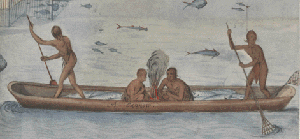
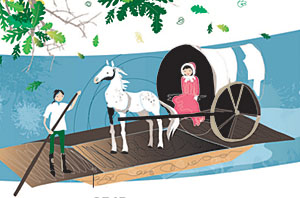
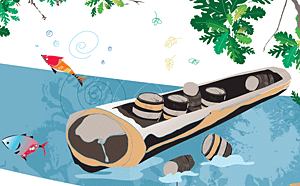
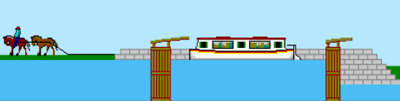
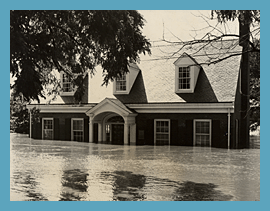
If your students enjoyed the activities on this web site, here are some links with more fun ways for them to learn Scottsville's history: ------------------------------------------------------------------------------------------- Students will read the attached fact sheet and answer questions about Monacan life along the flood plain of the James River, Then students read a historical marker with information about the Monacan Indian Village, past and present. Students locate the original Monacan village, Monasukapanough, on John Smith's 1612 map of Virginia and make their own historical marker using the template provided. Grade 3 History 3.6: The student reads and constructs maps, tables, graphs, and/or charts. ------------------------------------------------------------------------------------------- A Community Begins, 1744-1762: After studying the attached fact sheet about life in Scottsville during colonial times, students choose 1-2 activities that they would like to participate in during Court Days. Grade 3 History 3.8, 3.10, and 3.11d: Students recognize the importance of government in the community and how people and regions specialize in what they can do best and trade for the rest. Also students will describe how people can serve the community, state, and nation in a republican form of government. ------------------------------------------------------------------------------------------- Students study the attached fact sheet about the batteau period in Scottsville. and then look at images of a dugout canoe and a batteau. Students read information about both types of transportation and then fill out a Venn Diagram comparing dugout canoes and the batteau. Grade 3 History 3.11d: Students will describe how people can serve the community, state, and nation in a republican form of government. ------------------------------------------------------------------------------------------- Students study the attached fact sheet about the James River and Kanawha Canal which greatly improved the transport of produce and manufactured products between the Shenandoah Valley and Richmond via the busy port at Scottsville. Then students will look at a picture of a lock and learn some key vocabulary words related to canals and how canal locks work. Grade 4 History VS.10c: Students will demonstrate knowledge of government, geography, and economics by explaining how advances in transportation have contributed to Virginia's prosperity. ------------------------------------------------------------------------------------------- Students review the attached fact sheet and answer the questions about how Scottsville citizens served their community, state, and nation during the Civil War and how the war impacted local life. Students will also learn how Scottsville residents worked after the war to improve a devastated economy. Then students will consider what job they would like to have done during the Civil War based on information from the fact sheet. Students will also read about three Scottsville residents who contributed to the war effort. Grade 3 History 3.11d: Students will describe how people can serve the community, state, and nation in a republican form of government. ------------------------------------------------------------------------------------------- After studying the attached fact sheet and answering questions about the flood damage to Scottsville in the past, students will look at a chart of Scottsville's ten most destructive floods and compare the heights of these floods to some objects with which they are familiar. Students will also consider what objects and buildings they would want to protect if a flood damaged their town. Grade 4 History VS.9 and VS.10: Students will demonstrate knowledge of 20th and 21st century Virginia by describing its economic and social transitions. Students will also demonstrate knowledge of government, geography, and economics by explaining how advances in transportation, communications, and technology have contributed to Virginia's prosperity. ------------------------------------------------------------------------------------------- 
Questions: Building Trivia As an extension to the online 'Getting To Know Your Town' activity, the teacher or students could formulate questions such as these: 1. What is the oldest church in Scottsville? Answer: Scottsville Presbyterian Church, 1827. Click on all the churches and compare dates or read captions to find out which one claims the title. 2. Why is the Chester building called by that name? Answer: Its architect was from Chester, England. Social Studies 4.7 and 5.9: This activity would promote group learning and active use of primary resources and highly refined analytical skills.
Activity: Street Names Go to the search engine on the main web site and have the student type in some of the last names that are associated with many of the buildings and streets around town to understand how streets get their names. What can you learn from street signs? Answer: The origins of the people, who first settled your town, may be included in a street name. In certain parts of the country, there are streets that have Spanish or Native American names. In Louisiana, street names are in French because the French first settled that area. Streets are often named after well-known members of the community, like mayors and important business people. You also can find more information about every street name by going to the local clerk’s office. They’ll either have your answers or be able to refer you to someone who does! C/T 5.3 use search strategies to retrieve electronic information using databases…, use electronic…indexes and catalogues
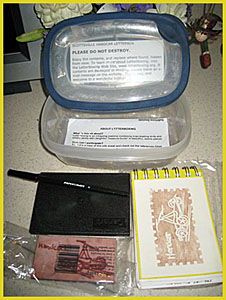
Activity: Before and After You can also have the student compare and contrast what buildings are currently in Scottsville today and which buildings they replaced. If you have the ability to print in color, you could print out a bunch of the pictures and make a memory game! Simply right-click on any picture you see in the online photo archives and go to “save picture as.” Name the picture what you want and create a folder on your desktop in which to save them. You can adjust the size as you see fit, but try fitting about 9 pictures on a page which makes a good sized memory game. VS.1.e: make connections between past and present SOL: 4.1: location and growth of cities ------------------------------------------------------------------------------------------- Activity: Challenge Your Friends! As a class, or a small group, create clues and make letterboxes to hide around your school playground, or your backyard. Use cardinal directions and create a map to guide future explorers on the way. Include historical information such as, “This is the track where Jane broke the school record in the mile.” Then hide your boxes and stamps and trade clues with your friends to see if you can find each other’s! Social Studies 4.2, 4.7, 5.9; English 5.7 and 5.8: Promotes group learning and active use of analytical skills; incorporates concepts of absolute and relative location. ------------------------------------------------------------------------------------------- 
Activity: Reconstruction Get a clay pot and draw/paint a few pictures on it. Then break it, much like you would a piggy bank or other object. As a safety precaution you can put the item in a pillow case or sock to break it so that the pieces don’t hit anyone in the eye. Dump the pieces out and have the students try to glue the pot back together, just like a conservation team would. Find some sea shells, or small rocks which have natural holes in them, or small soft seeds which look like beads. Using a needle and strong thread or fishing string, string them onto the thread and make a prehistoric necklace. The Monacans and other native American tribes used things from nature to create fine jewelry and art, see how well you can do. Art 4.3, 4.5, 4.10, 4.22, 5.5, 5.7: Explains art as evidence of our past. Interdisciplinary connections between Art and Social Studies. Emphasizes group learning. ------------------------------------------------------------------------------------------- The educational activities on this webpage were created by Rachel Gottlieb and Jessica Koepfler. If you have any activities you think other teachers, parents, or students might benefit from (as well as any other comments you might have for this web site), please send them our way, and we'll continually update this page for you! Send all questions, comments, and concerns to: info@scottsvillemuseum.com |